

Magnetic therapy, precisely timed.
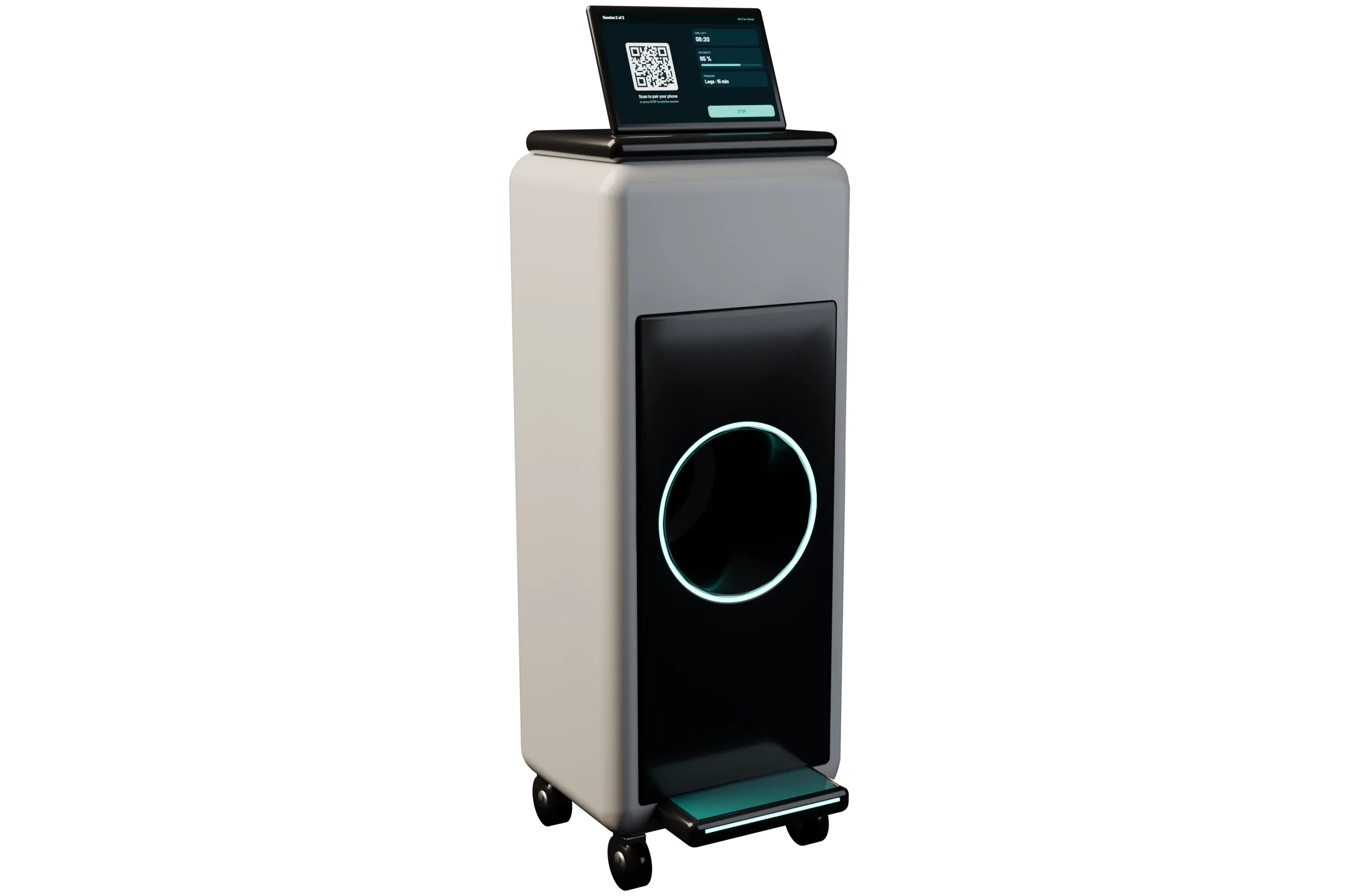
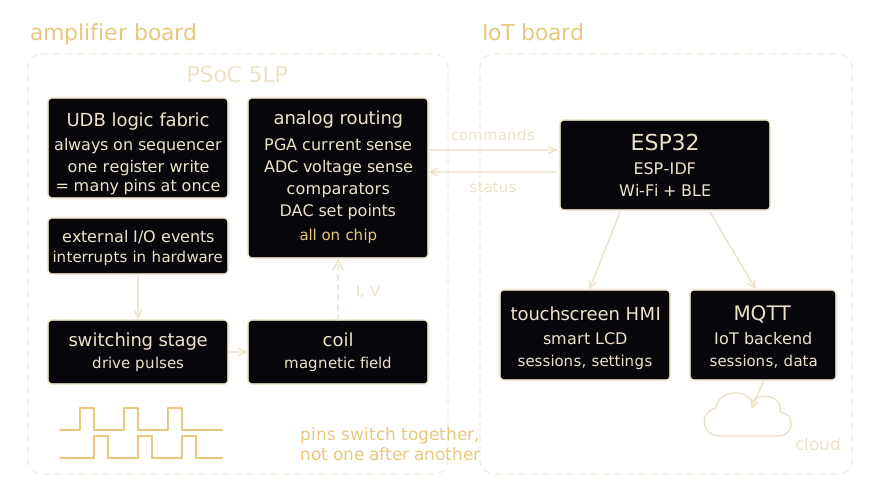
A therapy device that stimulates muscle with low frequency magnetic fields, built around two boards. We wrote the firmware for both and helped optimise their schematic design. The amplifier board drives the coil with sequencing that runs in the PSoC 5LP's own logic, and the IoT board gives the device a touchscreen, phone pairing and a link to the cloud through the ESP32.
- Sector
- Medtech
- Year
- 2025
- Our role
- Firmware and hardware design consulting
Many signals, one instant.
Driving the coil means switching several outputs in a fixed pattern, again and again, with timing that cannot slip while the processor is busy elsewhere. At the same time the board has to measure coil current and voltage, react to external events and stay safe.
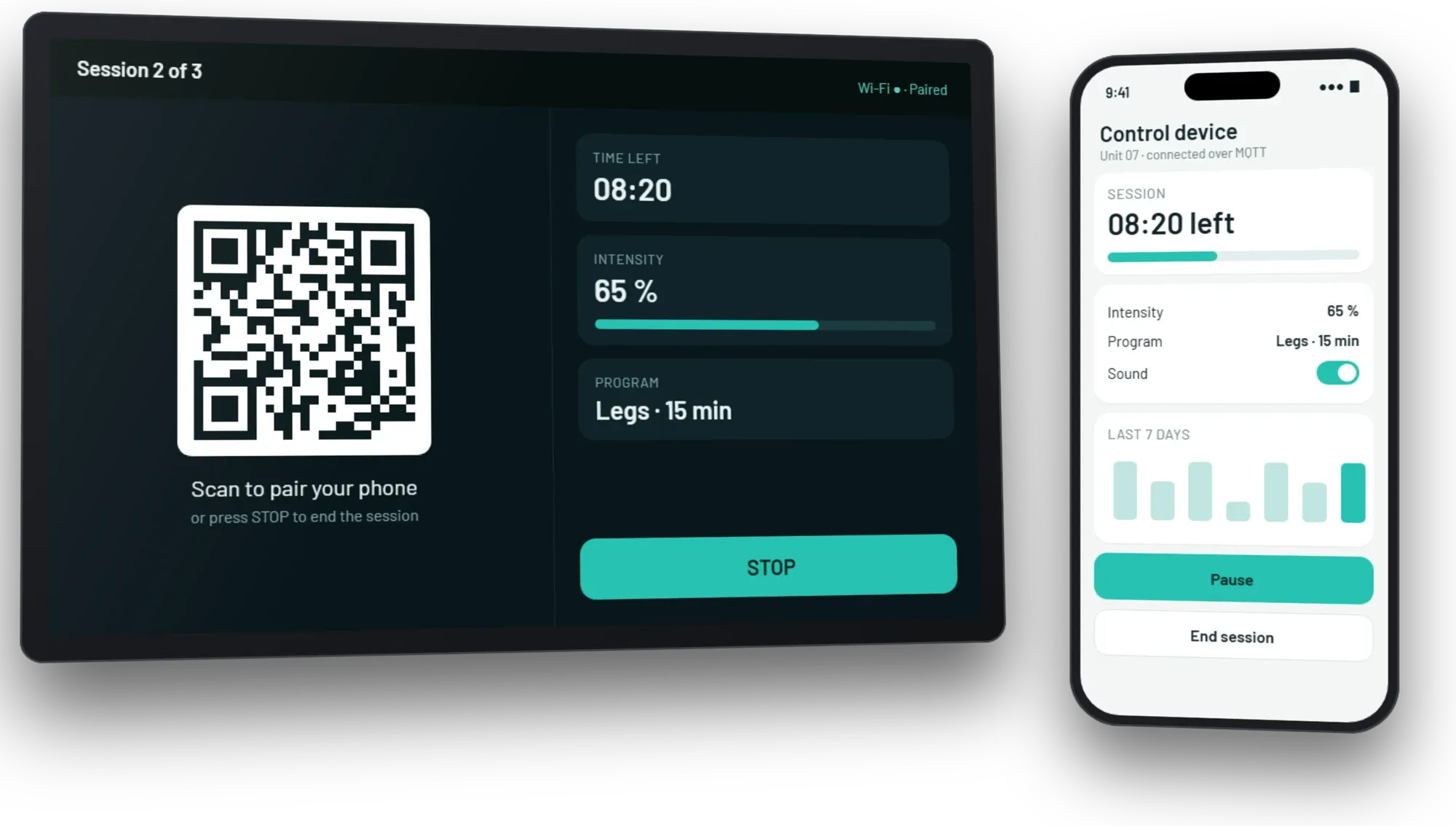
The device also had to be easy for staff at the bedside: start a session on the screen, pair a phone, and have every session reported to the backend without anyone writing it down.
Amplifier and IoT.
- 01
Sequencing in logic, not code
We used the PSoC 5LP's programmable logic fabric for an always on, high speed sequencer. Pins change together through direct register writes, so a complex switching pattern runs on time whatever the CPU is doing.
- 02
Analog on chip
We routed the PSoC's analog fabric to do the signal conditioning on board, with current and voltage sensing, switching and external I/O event handling done on chip rather than in extra parts.
- 03
Wi-Fi and the touchscreen
On the IoT board we built on the ESP32 with the ESP-IDF framework, making full use of its Wi-Fi and driving a responsive touchscreen for sessions, settings and pairing by QR code.
- 04
MQTT to the backend
The device talks to the IoT backend over MQTT, so sessions and device data arrive where they are needed and the device can be followed and controlled from a phone.
- 05
Schematic optimisation
With our in depth knowledge of the PSoC 5LP, we helped optimise the schematic design, so more of the signal conditioning and sequencing could live inside the chip and the hardware suited the timing the coil needs.
On time, on the network.
The coil sequence runs in hardware and holds its timing, with sensing and protection on the same chip. Staff run sessions from the touchscreen or a phone, and each session reaches the backend over MQTT.