
Compute platforms for embedded cameras.
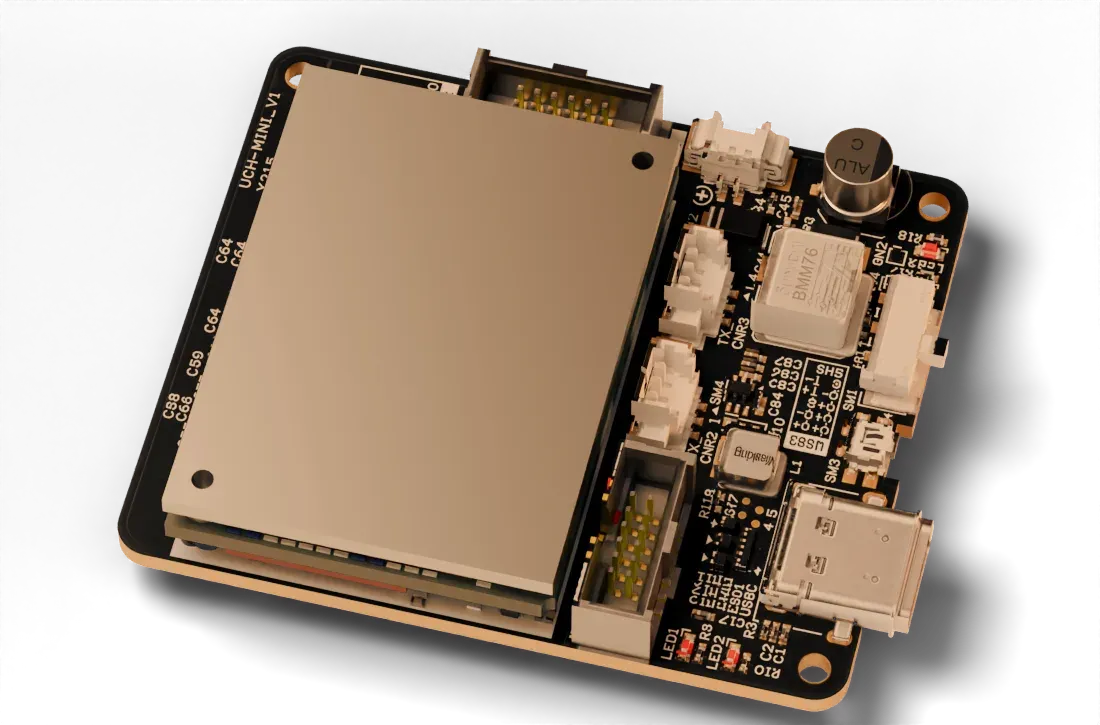
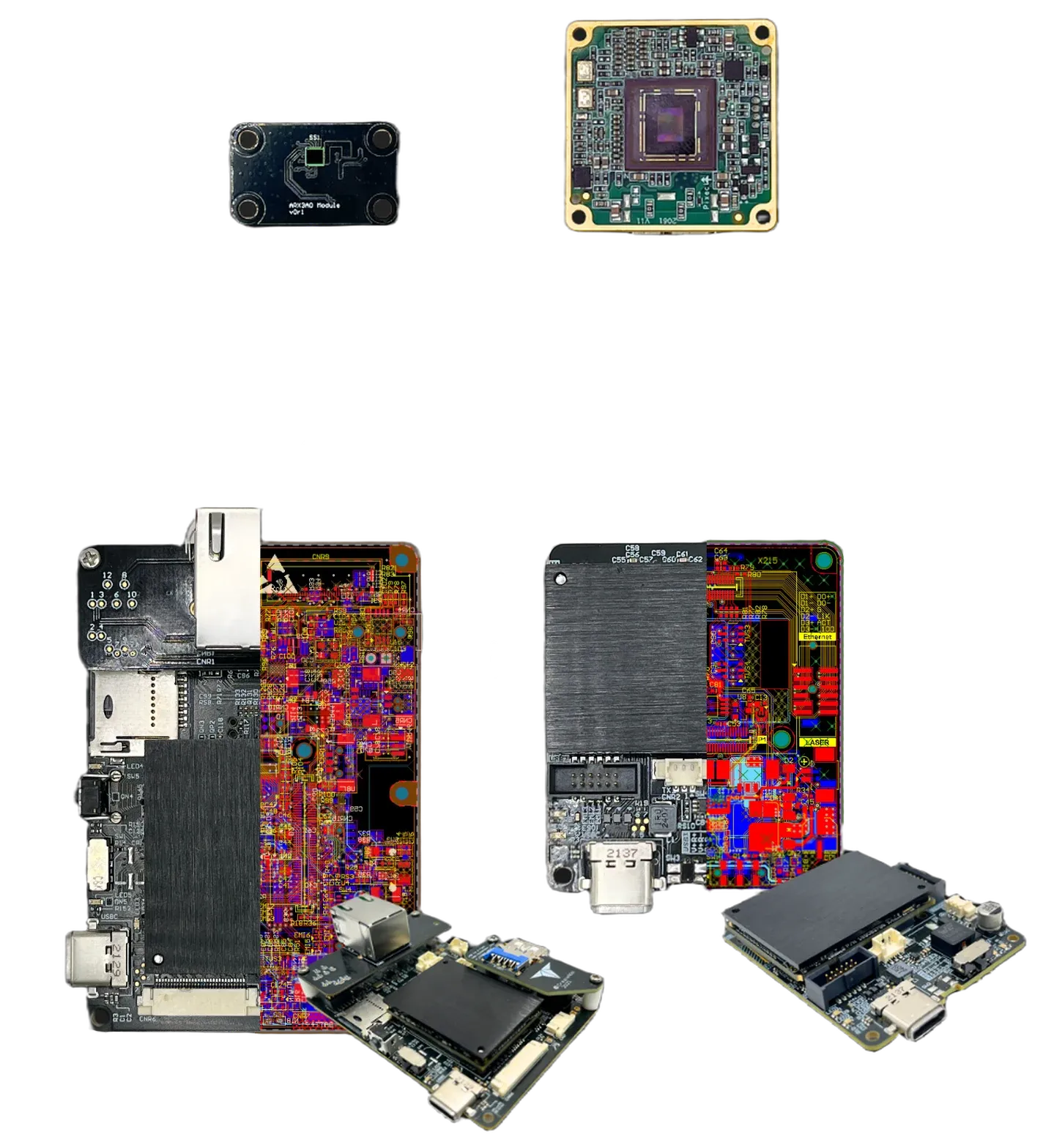
Two compact compute modules, Mini and Micro, that adapt to form factors from wearables to robotic controls. USB 3.0, MIPI CSI/DSI and a custom Yocto Linux with camera drivers we wrote for sensors that had none.
- Sector
- Edge AI & vision
- Year
- 2023/24
- Our role
- Hardware, firmware & OS
One core, many bodies.
The platform had to live inside very different products, from a body worn device to a robotic controller, without a new design each time, and process and stream images on board with as little extra hardware as possible.
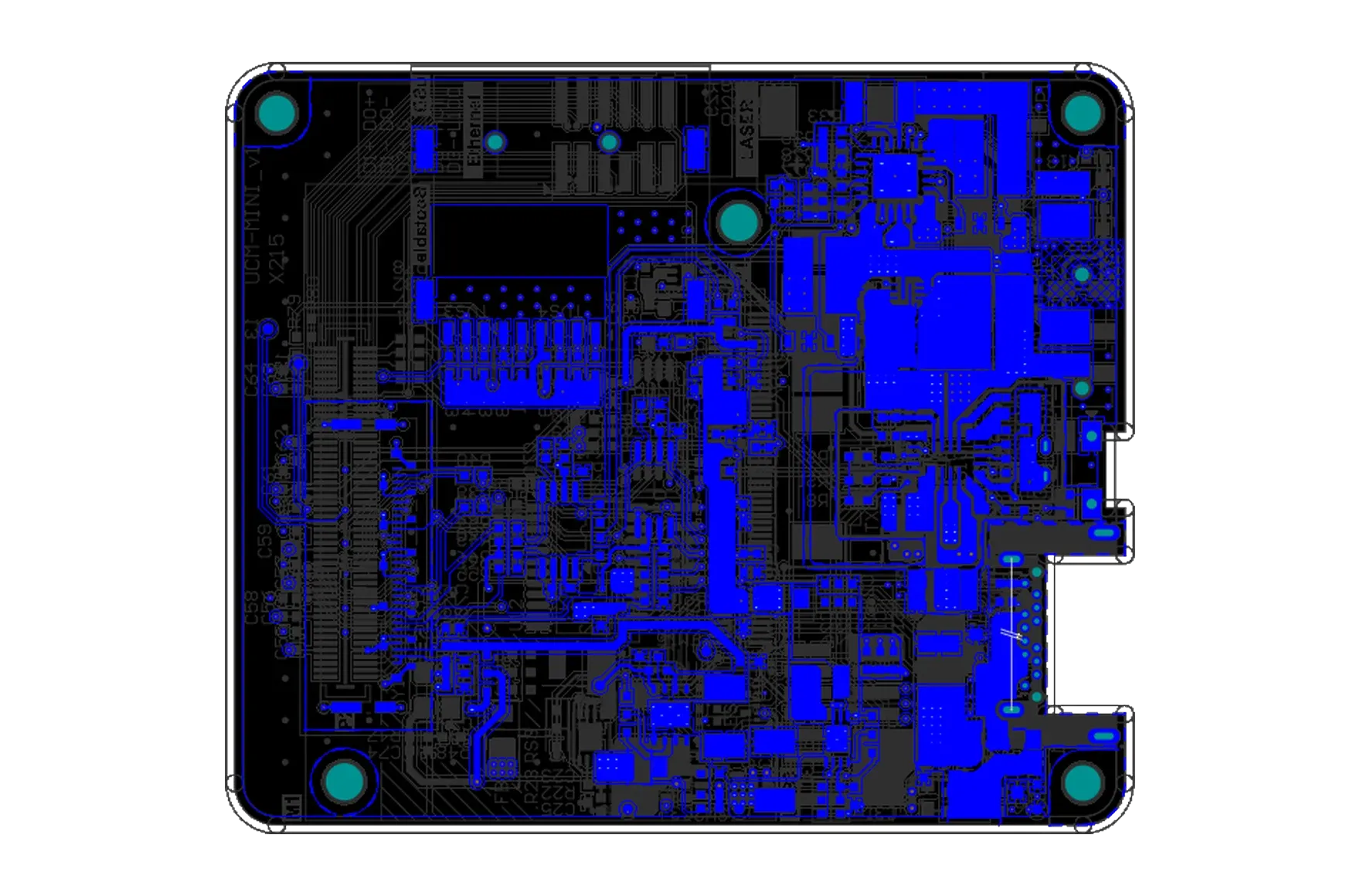
Some of the camera modules were new to the market and had no Linux drivers, so off the shelf boards were not an option. The compact layout also had to shed the heat of a high current compute unit while keeping the USB 3.0 lanes clean, which meant careful planning of the layer stack, vias, impedance and trace lengths.
From sketch to silicon.
- 01
Architecture
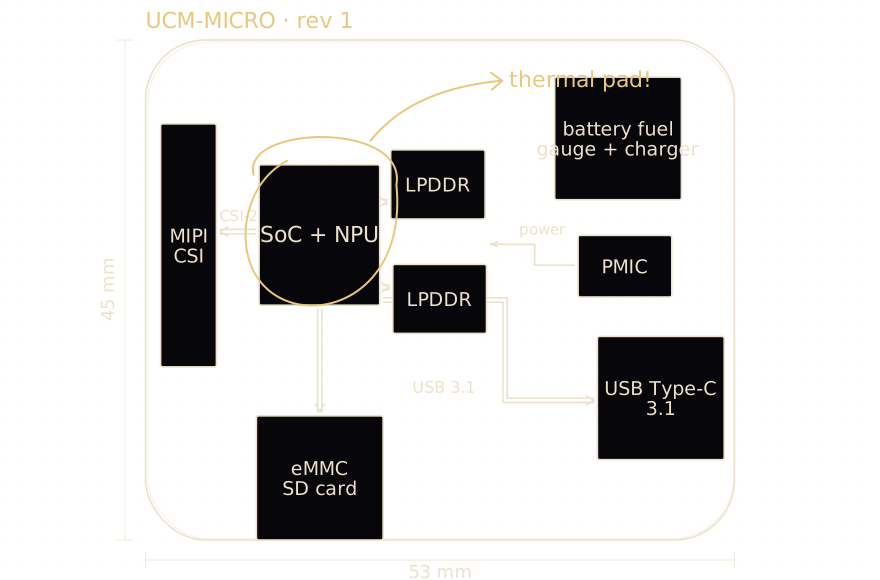
We mapped the camera pipeline, memory and power budget into one block diagram, sized so the same core could serve a wearable and a robot controller.
- 02
Layout & signal integrity
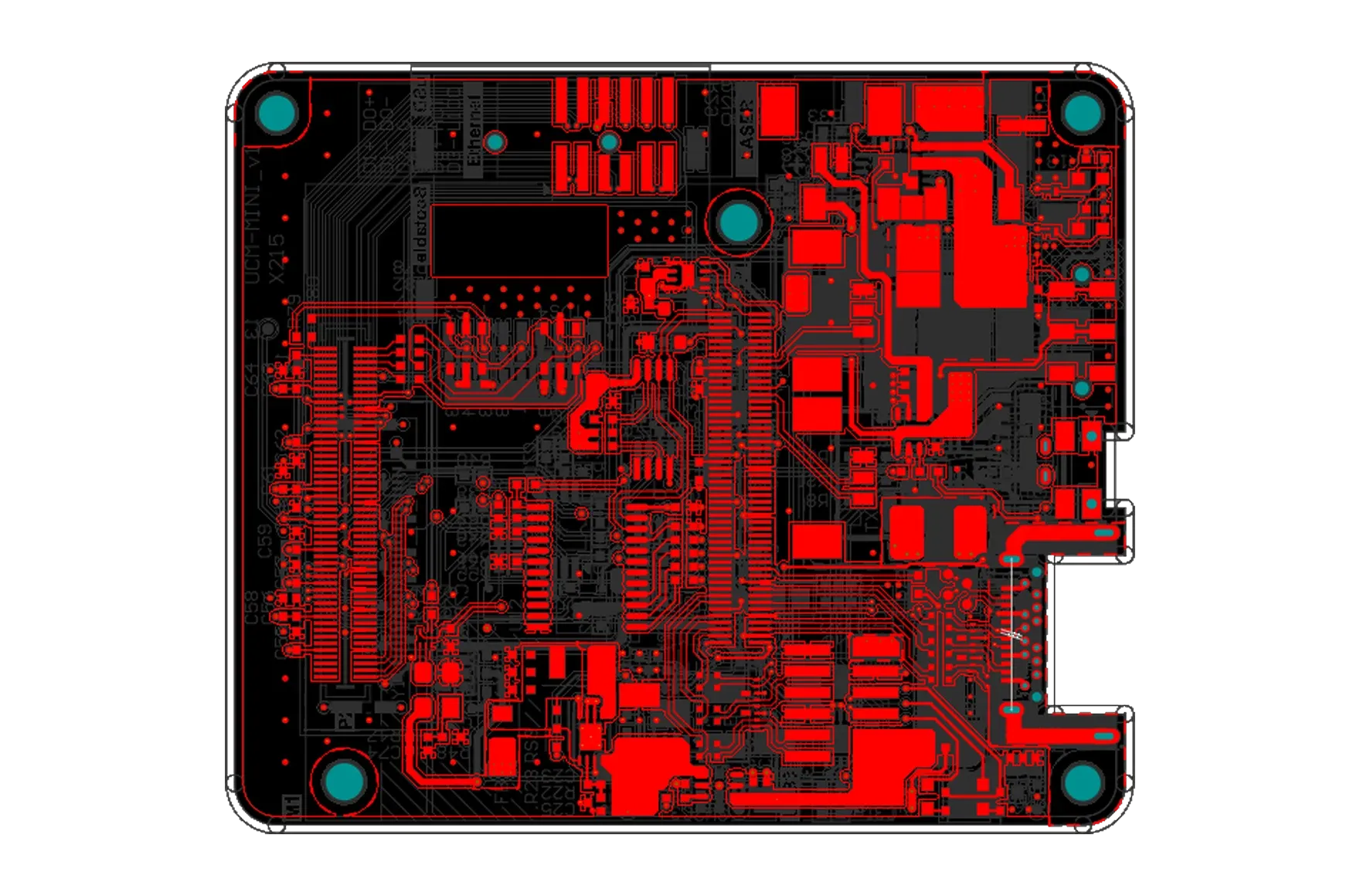
A dense multilayer layout with length matched MIPI and USB 3.0 pairs, a solid return path under every high speed lane and power planes split per rail.
- 03
Bring up & drivers
Custom Yocto Linux with camera drivers we wrote for sensors that had no vendor support, then tuned the capture path for frame rate and latency.
- 04
Validation
Signal integrity checks, thermal soak and capture stress tests on both variants before handing over production files.
Ready for production.
Both variants share one software stack and one set of drivers, so a product can move between form factors without starting again. Capture runs at more than 300 frames per second, with wireless data and video streaming built in.
The platform now serves as a starting point for healthcare, medical imaging, autonomous systems and industrial automation work, where fast processing and dependable wireless links matter.